icon: Fast UK Delivery
icon: Subscribe & Save!
icon: UK Company
icon: Complete Golf Sets
icon: End of Season Sale

Drivers, Irons, Wedges, and Putters Explained


Golf Club Types Explained: Drivers, Irons, Wedges & Putters

Understanding the different types of golf clubs is one of the quickest ways to improve your decision-making on the course. Every club in your bag is designed for a specific job -- from launching powerful tee shots with a driver to controlling distance with irons, scoring with wedges, and holing putts with a putter.

Whether you're new to golf, returning after a break, or simply want to build a better, more balanced set, this guide explains the main golf club categories and how to choose the right clubs for your swing, skill level and playing style.


Why Understanding Golf Club Types Matters

A standard golf bag can hold up to 14 clubs (the maximum allowed under the Rules of Golf). Each club has a different loft, shaft length and head design to create specific launch, spin and distance outcomes.

Knowing which club to use -- and when -- helps improve:

  • Distance control and yardage gapping
  • Shot consistency and strike quality
  • Accuracy and dispersion
  • Scoring performance (especially inside 120 yards)
  • Course management and smarter strategy

Let's break down each club type in a way that's easy to understand and easy to apply.


1. Drivers - Built for Maximum Distance Off the Tee

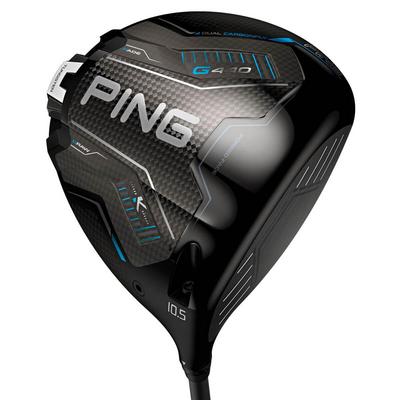
The driver is the longest club in the bag and is designed primarily for tee shots on par 4s and par 5s. Drivers are engineered for maximum ball speed, high launch and long carry distance.

Key Features of a Driver

  • Largest clubhead (up to 460cc)
  • Longest shaft in the bag
  • Lowest loft (typically 8 degrees-12 degrees)
  • Optimised for distance, speed and forgiveness

Who Should Use a Driver?

Most golfers carry a driver, but the best loft depends on swing speed and launch needs:

  • Faster swing speeds often suit lower loft (8 degrees-9 degrees)
  • Moderate swing speeds typically perform best with 10.5 degrees-12 degrees
  • Slower swing speeds often benefit from higher loft for easier launch

Many modern drivers include adjustable hosels and movable weights to fine-tune loft, face angle and shot shape (draw, fade, neutral).

When to Use a Driver

  • Tee shots on longer holes
  • Situations where maximum distance is the priority
  • Wider fairways where you can be more aggressive

2. Fairway Woods & Hybrids - Bridging the Gap (Bonus Category)

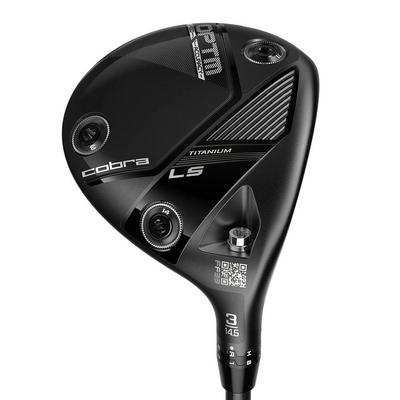
While drivers, irons, wedges and putters are the four main club types, fairway woods and hybrids are essential for many golfers because they bridge the gap between driver distance and iron control.

Fairway Woods

  • Higher loft than drivers (typically 13 degrees-21 degrees)
  • Used from the tee or fairway
  • Great for long approach shots and controlled tee shots

A 3-wood or 5-wood is often used for:

  • Long par 5 approaches
  • Safer tee shots on tight holes
  • Reaching greens in two

Hybrids

Hybrids are designed to replace difficult-to-hit long irons. They're often easier to launch due to:

  • Lower centre of gravity
  • Wider sole for better turf interaction
  • More forgiveness on off-centre strikes

Hybrids are especially popular for mid-to-high handicap golfers who struggle with 3, 4 or 5 irons.


3. Irons - Precision, Control & Consistent Distance

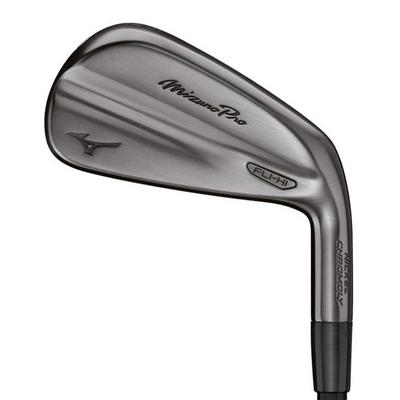
Golf irons make up the core of most sets. You'll use irons for approach shots into greens, tee shots on par 3s and shots from the fairway or rough where accuracy and consistency matter.

How Irons Are Numbered

Irons are typically numbered from 3 to 9:

  • Long irons (3-5): lower loft, longer distance, harder to hit
  • Mid irons (6-7): balanced distance and control
  • Short irons (8-9): higher loft, better accuracy and stopping power

As the number increases, the loft increases and the shaft length decreases. This results in a higher ball flight and shorter distance.

Types of Irons

  • Game Improvement Irons: larger heads, wider soles, high forgiveness and easy launch
  • Players Irons: smaller profile, more workability and shot shaping
  • Blade Irons (Muscle Back): compact, minimal forgiveness, maximum feedback and control

When to Use Irons

  • Approach shots into greens
  • Tee shots on par 3s
  • Fairway and rough shots under ~200 yards (depending on golfer)

4. Wedges - The Scoring Clubs

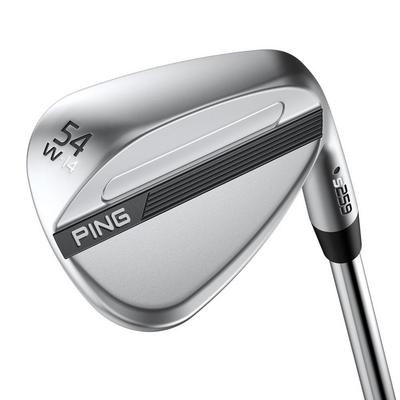
Golf wedges are specialised irons designed for short-distance precision, higher trajectory and increased spin. If you want to lower your handicap, improving wedge play is one of the best places to start.

Main Types of Wedges

Pitching Wedge (PW)

  • Loft typically 44 degrees-48 degrees
  • Used for fuller approach shots
  • Often included as part of an iron set

Gap Wedge (GW)

  • Loft typically 50 degrees-52 degrees
  • Bridges the distance gap between PW and SW
  • Helps create consistent wedge gapping

Sand Wedge (SW)

  • Loft typically 54 degrees-56 degrees
  • Designed for bunker shots and soft turf
  • Wider sole helps prevent digging

Lob Wedge (LW)

  • Loft typically 58 degrees-62 degrees
  • Used for high, soft shots with stopping power
  • Great for short-sided shots and flop shots

Why Wedges Matter

Wedges help you control:

  • Distance and trajectory inside 120 yards
  • Spin and stopping power on greens
  • Chipping, pitching and bunker play

Many golfers carry 3 or 4 wedges to cover key yardages and shot types.


5. Putters - Where Scores Are Made

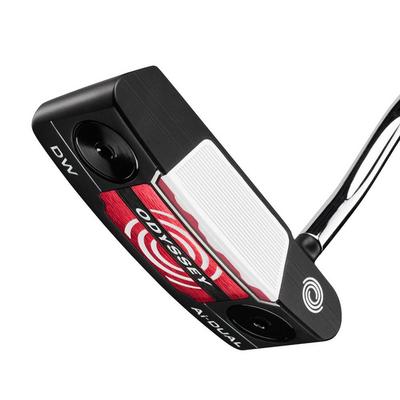
The putter is used on the green to roll the ball into the hole. Putts often make up around 40% of shots in a typical round, so choosing the right putter can have a huge impact on scoring.

Types of Putters

Blade Putters

  • Traditional, narrow design
  • Clean look at address
  • Often favoured by golfers with an arcing stroke

Mallet Putters

  • Larger head for stability
  • Higher forgiveness
  • Great for straighter putting strokes

Mid-Mallet Putters

  • Blend of blade and mallet shapes
  • Balanced control and forgiveness

Key Putter Considerations

  • Head shape and alignment aids
  • Face insert vs milled face
  • Putter length and lie angle
  • Grip size and style

How Many Clubs Should You Carry?

You can carry up to 14 clubs. A common setup includes:

  • 1 Driver
  • 1-2 Fairway Woods
  • 1-2 Hybrids
  • 5-7 Irons
  • 3-4 Wedges
  • 1 Putter

The right mix depends on your skill level, swing speed, typical course conditions and how far you hit each club (your distance gapping).


Choosing the Right Golf Clubs for Your Game

When buying golf clubs or building a set, focus on these four areas:

  • Skill level: beginners usually benefit from forgiving, game-improvement clubs
  • Swing speed: affects loft choice and shaft flex (stiff, regular, senior, ladies)
  • Course demands: long courses may need more distance clubs; tight courses reward accuracy
  • Gapping: ensure consistent distance gaps, especially between wedges and long clubs

For best results, consider a professional golf club fitting. Properly fitted clubs can improve launch, spin, distance control and confidence across the bag.


Quick FAQ: Golf Club Types

What are the main types of golf clubs?

The main golf club types are drivers, irons, wedges and putters. Many golfers also carry fairway woods and hybrids to fill distance gaps.

What is the difference between irons and wedges?

Irons are primarily used for longer approach shots and controlled distances into greens. Wedges have higher loft and are designed for shorter scoring shots, higher trajectory and more spin around the green.

How many clubs can you carry in your golf bag?

Under the Rules of Golf, you can carry a maximum of 14 clubs during a round.

Which golf club is best for beginners?

Most beginners benefit from game improvement irons, higher-loft drivers, and forgiving hybrids because they promote easier launch, more forgiveness and improved consistency.


Final Thoughts: Build a Balanced Golf Bag

Every club has a role:

  • Drivers maximise distance off the tee
  • Irons deliver precision and consistent approach play
  • Wedges control scoring shots and short game spin
  • Putters convert chances into pars and birdies

Understanding golf club types helps you make smarter choices on the course and build a set that truly matches your game. If you're unsure where to start, explore the latest clubs and get advice from ClickGolf.co.uk -- because in golf, it's not just about owning 14 clubs, it's about knowing how to use them.



Back to articles

Featured Products

Page 1 of 1
Page 1 of 1
categories

loading
Your basket was updated...
Just added product image
Product name
#XXXX
£0.00
You also added:
Checkout Now
Continue Shopping