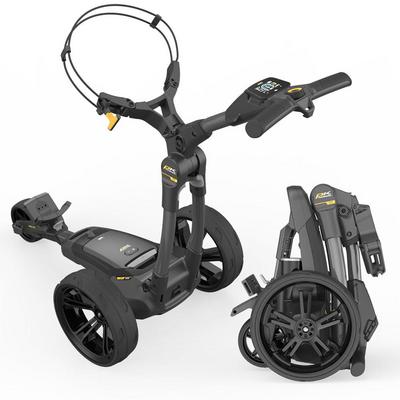
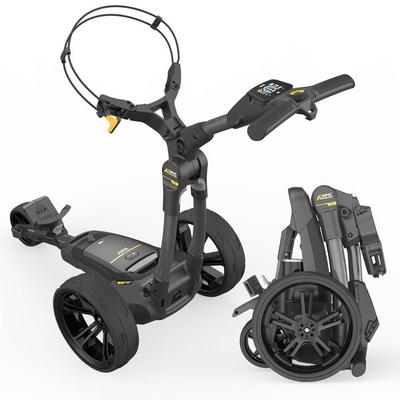
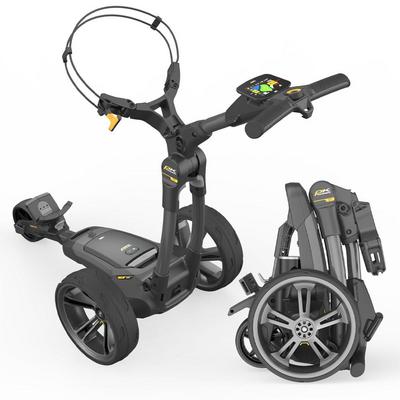
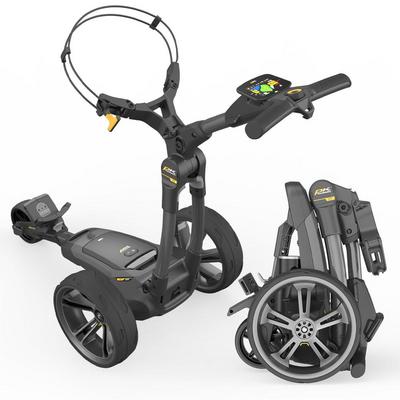
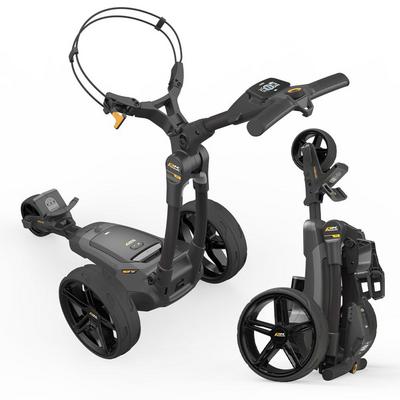
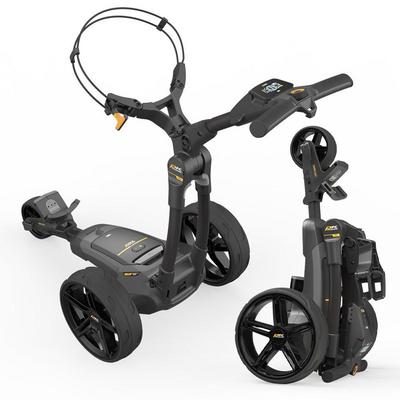
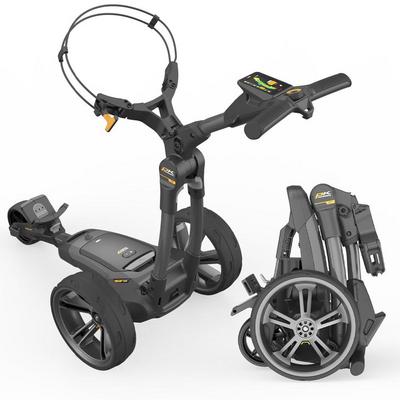
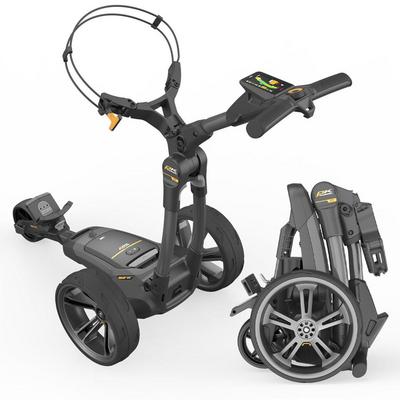
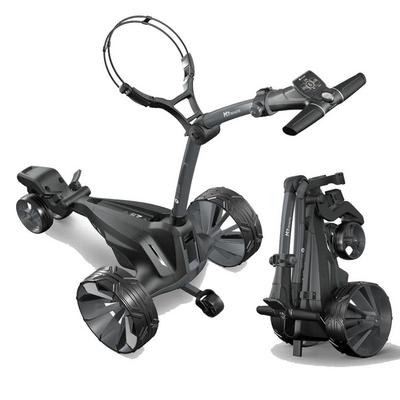
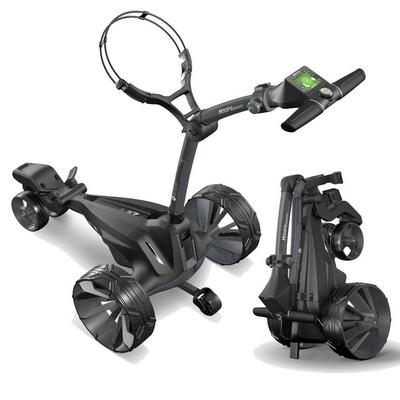
Golf courses are rarely completely flat. Sloping fairways, steep paths and uneven ground can make an electric golf trolley more difficult to control, particularly when travelling downhill with a fully loaded golf bag.
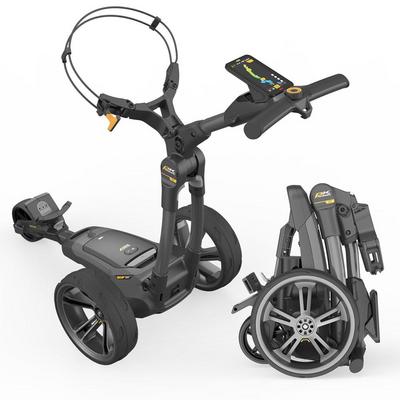
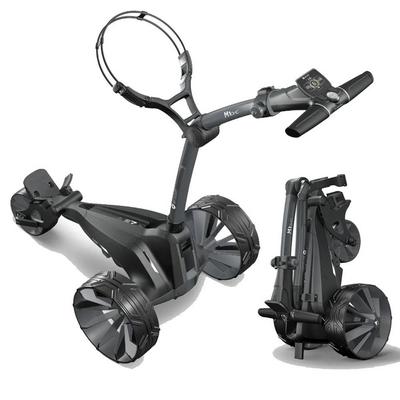
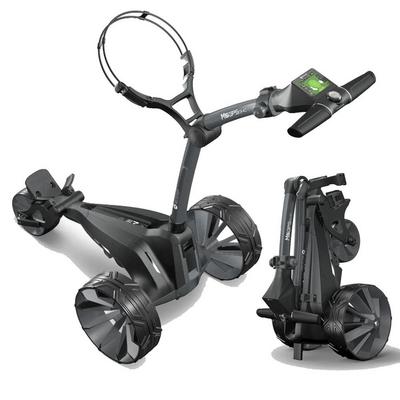
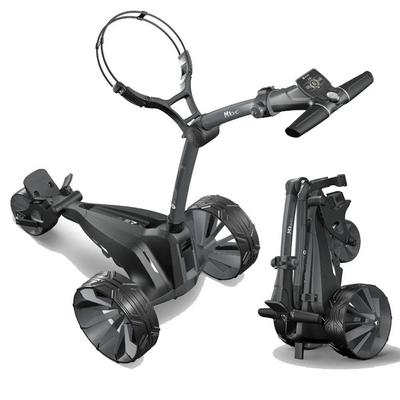
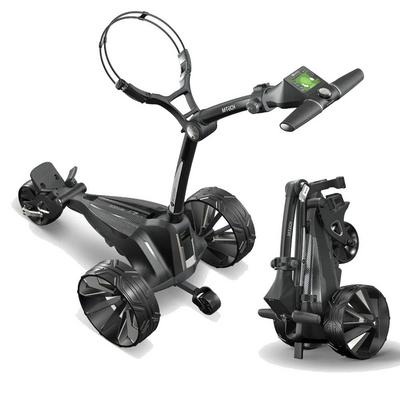
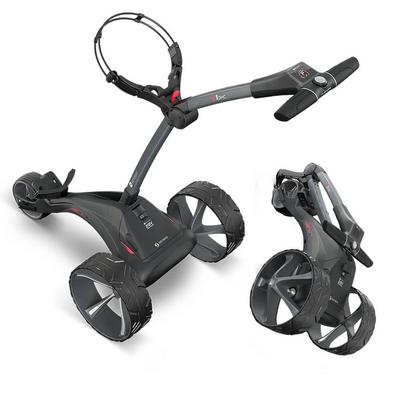
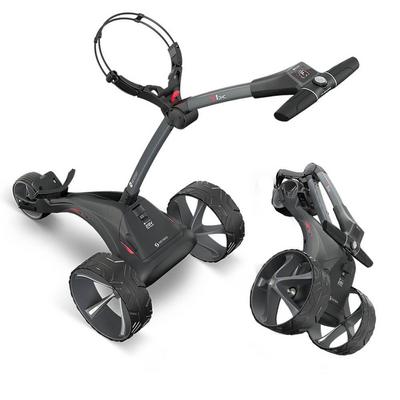
Downhill braking and hilly-terrain control help an electric golf trolley maintain a steadier pace across gradients. Technologies such as Motocaddy's Downhill Control (DHC) and PowaKaddy's Electronic Braking System (EBS), electronic braking systems and parking brakes provide additional reassurance for golfers who regularly play on undulating or demanding courses.
Downhill Control is designed to prevent an electric golf trolley from accelerating freely as it travels down a slope.
When a conventional powered trolley begins descending, gravity can cause it to move faster than the selected speed. A trolley equipped with automatic downhill control regulates its movement, helping it maintain a more consistent pace throughout the descent.
This allows the golfer to walk naturally alongside the trolley without continually holding it back or repeatedly adjusting the speed control.
An electronic braking system uses the trolley's drive system to manage wheel speed when travelling down a gradient.
Rather than allowing the trolley to gather momentum, the system applies controlled resistance to help maintain the selected speed. The amount of assistance provided can vary according to the trolley model, gradient and ground conditions.
This technology is particularly useful when carrying a heavy golf bag, as the additional weight can increase the trolley's momentum on steeper slopes.
A controlled descent can make walking a hilly golf course more comfortable and manageable. The main benefits include:
An electronic parking brake helps hold the trolley stationary when it is stopped on a slope or uneven section of the course.
This can be especially useful when preparing to play a shot from a sloping lie, waiting on an elevated tee or stopping beside a raised green. Depending on the model, the brake may be activated using a button or control on the trolley handle.
The parking brake should always be engaged carefully, and the trolley should be positioned securely before the golfer moves away from it.
Downhill control works most effectively when supported by wheels designed to provide dependable grip.
All-terrain trolley wheels commonly feature a deeper or more aggressive tread pattern to improve contact with wet grass, loose ground and uneven surfaces. Increased traction can reduce unwanted wheel slip while the braking system regulates speed.
Tyres should be kept clean and checked regularly, as compacted mud and worn tread can reduce their ability to grip the course.
Although downhill braking is the main focus of EBS/DHC technology, overall trolley stability is equally important when climbing slopes.
A suitably powered electric trolley can reduce the physical effort required to move a heavy golf bag uphill. A stable chassis, well-balanced bag position and appropriate wheel design help the trolley remain controlled as the gradient increases.
Golfers should select a suitable speed before beginning a climb and avoid making sudden directional changes on steep ground.
Side slopes can be more challenging than straightforward climbs or descents because the trolley's weight is transferred towards one side.
A wide wheelbase and low centre of gravity can improve stability, but golfers should still remain close to the trolley and choose the safest available route. Whenever possible, approach severe slopes directly rather than travelling across them at a sharp angle.
Keeping the golf bag properly secured and distributing its contents evenly can also help reduce instability.
Some electric golf trolleys are compatible with a rear anti-tip wheel. This additional wheel helps prevent the trolley tipping backwards when climbing steep gradients or accelerating with a heavily loaded bag.
An anti-tip wheel can be particularly useful on hilly courses, although compatibility and availability vary between trolley models.
| Feature | Standard Electric Trolley | Downhill-Control Trolley |
|---|---|---|
| Downhill Speed | May increase naturally on steeper gradients | Automatically regulated for a steadier descent |
| Braking Assistance | Usually requires more manual control from the golfer | Electronic resistance helps control wheel speed |
| Parking on Slopes | Depends on the braking system fitted to the model | Frequently includes an electronic parking brake |
| Wheel Design | Standard trolley wheels | Often supplied with enhanced all-terrain tread |
| Best Suited To | Flat and gently undulating golf courses | Hilly, steep and frequently undulating courses |
A trolley with downhill braking may be particularly beneficial for golfers who:
Downhill braking is important, but it should not be the only consideration when selecting an electric golf trolley for a demanding course.
Motor performance, wheel traction, chassis stability, battery range and overall weight distribution can all influence how effectively a trolley handles hills.
| Feature to Consider | Why It Matters on Hilly Terrain |
|---|---|
| Automatic Downhill Control | Helps maintain a consistent speed when descending |
| Electronic Parking Brake | Helps hold the trolley stationary on gradients |
| All-Terrain Wheels | Provides improved grip across wet, soft and uneven ground |
| Motor Performance | Supports consistent progress when climbing steeper sections |
| Anti-Tip Wheel Compatibility | Can provide additional rear stability on climbs |
| Battery Capacity | Hilly terrain can place greater demand on the drive system |
| Adjustable Handle | Helps the golfer maintain a comfortable controlling position |
Downhill-control technology assists the golfer, but it does not remove the need to supervise the trolley or choose an appropriate route.
Regular maintenance helps the trolley's braking and traction systems perform as intended.
Remove mud and grass from the wheels after each round, inspect the tyre tread for wear and confirm that the wheels are attached securely. The folding mechanism, axle and brake operation should also be checked periodically.
If the trolley no longer holds its speed correctly on descents or the parking brake fails to engage reliably, stop using it on steep ground and arrange an inspection by an authorised service centre.
For golfers who regularly encounter steep fairways and uneven terrain, downhill braking can make an electric trolley easier and more comfortable to manage.
Automatic speed regulation, an electronic parking brake and all-terrain wheels work together to provide improved control across gradients. Choosing a trolley with these features can reduce physical effort and help create a smoother experience throughout the round.